

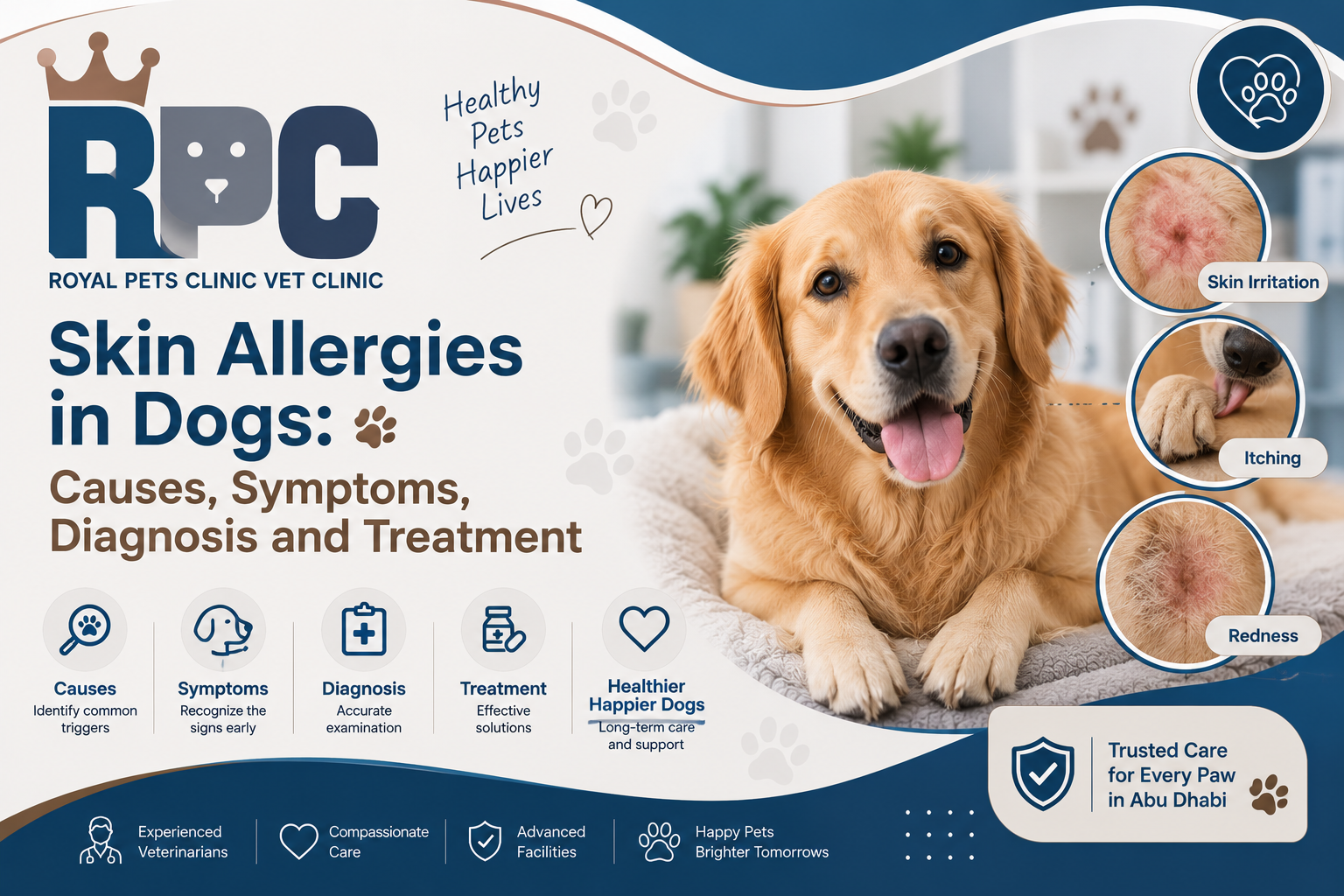
Skin Allergies in Dogs can turn a normally happy, comfortable pet into one that constantly scratches, licks its paws, rubs its face, or struggles with recurring skin and ear problems. While occasional scratching is normal, persistent itching, redness, hair loss, or irritated skin may indicate an underlying condition that deserves veterinary attention.
Dog skin allergies occur when the immune system reacts excessively to substances that would normally be harmless, such as pollen, fleas, certain food ingredients, dust mites, or substances that touch the skin. Because several other skin conditions can cause similar symptoms, identifying the actual trigger is essential before deciding on treatment.
If your dog is experiencing ongoing skin discomfort in Abu Dhabi, an examination at Royal Pets Veterinary Clinic Abu Dhabi can help determine what may be causing the problem and establish an appropriate treatment and management plan.
What Are Skin Allergies in Dogs?
Skin allergies, sometimes referred to as allergic dermatitis, develop when a dog’s immune system overreacts to a particular allergen. The reaction can lead to inflammation, itching, redness, irritation, and repeated scratching or licking.
The problem is not always limited to one visible rash. Some dogs develop recurring symptoms involving the paws, ears, face, abdomen, or other areas of the body.
Common allergy triggers can include:
- Pollen and grass
- Dust and dust mites
- Mold
- Fleas
- Certain food ingredients
- Chemicals or cleaning products
- Some plants or grooming products
The symptoms may be seasonal in some dogs and present throughout the year in others.
What Causes Skin Allergies in Dogs?
Understanding the underlying cause of Skin Allergies in Dogs is important because treatment depends heavily on what is triggering the reaction.
Four major categories are commonly considered.
Environmental Allergies in Dogs
Environmental allergies are often associated with canine atopic dermatitis, or atopy. Dogs can become sensitive to allergens found around them, including:
- Tree and plant pollen
- Grass pollen
- Mold spores
- Dust mites
- Other airborne environmental particles
The face, ears, paws, armpits, and abdomen are among the areas frequently affected by environmental allergies.
Some dogs experience seasonal flare-ups, while others may have symptoms throughout most of the year.
Flea Allergy Dermatitis
A flea problem does not always require a large visible infestation.
Some dogs are hypersensitive to substances in flea saliva, meaning even a small number of flea bites can cause considerable itching and irritation. This condition is known as flea allergy dermatitis.
Dogs affected by flea allergy may scratch, chew, or lick themselves excessively. Consistent veterinarian-recommended parasite prevention can therefore form an important part of allergy management.
Food Allergies in Dogs
Food-related reactions are another possible cause of itchy skin.
Proteins and other dietary ingredients can trigger adverse reactions in susceptible dogs. Potential food allergens can include ingredients such as beef, chicken, dairy products, wheat, or lamb, although the exact trigger differs between individual animals.
Food allergy may cause:
- Persistent itching
- Red skin
- Paw irritation
- Hair loss
- Recurrent ear problems
- Recurring bacterial or yeast skin infections
Simply changing foods repeatedly is not a reliable way to determine whether a food allergy exists.
A properly controlled elimination diet followed by a dietary challenge remains the most dependable approach for confirming a suspected food allergy.
Contact Dermatitis
Some dogs develop localized skin irritation after direct contact with certain substances.
Possible triggers include:
- Cleaning agents
- Chemicals
- Plants
- Certain grooming products
- Irritating materials
Contact reactions commonly affect areas of skin that have direct exposure to the substance.
What Are the Common Symptoms of Skin Allergies in Dogs?
Symptoms vary between dogs, but itching is one of the most recognizable warning signs.
Common signs include:
- Frequent scratching
- Excessive licking
- Paw chewing
- Face rubbing
- Red or inflamed skin
- Rashes or bumps
- Hot spots
- Hair thinning or hair loss
- Scabs or sores
- Repeated ear problems
- Head shaking
- Unusual skin odor
- Recurring secondary skin infections
Veterinary guidance identifies itching, redness, hair loss, hot spots, and recurrent skin or ear problems among common features associated with allergic skin disease.
Recognizing these symptoms early can help prevent repeated scratching from damaging the skin further.
Why Is My Dog Constantly Scratching?
Persistent scratching is one of the main reasons pet owners begin investigating allergies, but allergies are not the only possible explanation.
Itching can also occur because of:
- Fleas or other parasites
- Bacterial infections
- Yeast overgrowth
- Dry or irritated skin
- Ear disease
- Other dermatological conditions
Repeated scratching can eventually damage the skin’s protective barrier, creating an opportunity for secondary infections.
For this reason, continuously treating the visible itching without determining its cause may provide only temporary relief.
A veterinary examination is the safer way to determine why your dog is scratching.
Why Does My Dog Keep Licking Its Paws?
Occasional paw licking is normal, but repeated licking or chewing can indicate discomfort.
Dogs with environmental allergies commonly experience itchiness involving their feet. Other possibilities include infections, foreign material, wounds, parasites, or contact irritation.
Signs worth watching for include:
- Red paws
- Swelling between the toes
- Brown staining from repeated licking
- Hair loss
- Unpleasant odor
- Broken or irritated skin
When paw licking becomes persistent, identifying the underlying problem can help stop the cycle of itching, licking, inflammation, and further skin damage.
Can Skin Allergies Cause Hair Loss in Dogs?
Yes. Hair loss may develop when a dog repeatedly scratches, chews, or licks the same area.
Inflammation can also affect the condition of the skin and coat.
Depending on the underlying condition, owners may notice:
- Thin patches of fur
- Small bald areas
- Broken hairs
- Red skin beneath the coat
- Scabbing
- Thickened skin in chronic cases
Hair loss should not automatically be assumed to be an allergy because parasites, hormonal problems, fungal disease, and other conditions can produce similar changes.
Can Dog Allergies Cause Ear Problems?
Recurring ear problems can sometimes be associated with underlying allergic disease.
A dog may:
- Shake its head frequently
- Scratch around its ears
- Develop red ear canals
- Show discomfort when the ears are touched
- Develop recurring discharge or odor
Food-related skin reactions can also be associated with recurrent inflammation of the external ear canal.
When ear problems repeatedly return after treatment, investigating an underlying allergy may therefore be worthwhile.
Skin Allergy vs Skin Infection in Dogs
Skin allergies and skin infections can look surprisingly similar—and they may occur together.
An allergic dog that constantly scratches and damages the skin can become more vulnerable to secondary bacterial or yeast infections.
| Condition | Possible Signs | Possible Trigger |
| Skin allergy | Itching, redness, paw licking | Food, fleas, environmental allergens |
| Bacterial infection | Redness, sores, discharge, odor | Bacterial overgrowth |
| Yeast problem | Itching, greasy skin, odor | Yeast overgrowth |
| Parasites | Scratching, hair loss, irritation | Fleas, mites or other parasites |
Because the symptoms overlap, photographs or visual inspection at home cannot always establish the correct diagnosis.
Veterinary testing may be needed before treatment is selected.
How Are Skin Allergies in Dogs Diagnosed?
There is no single test that identifies every type of dog allergy.
Diagnosis usually involves working systematically through your dog’s symptoms, history, lifestyle, parasite prevention, diet, and previous treatments.
Veterinary Examination and Medical History
The veterinarian may ask:
- When did the itching begin?
- Is it seasonal or year-round?
- Which areas does the dog scratch?
- Has your dog’s diet changed?
- What treats does the dog eat?
- Which parasite-prevention products are used?
- Does the dog experience recurring ear infections?
- Have previous treatments helped?
The pattern of symptoms often provides important clues.
Skin Testing
Depending on the dog’s condition, veterinary investigations may include techniques such as:
- Skin scrapings
- Cytology
- Fungal investigation
- Blood testing
- Other laboratory tests
These tests can help rule out parasites, infections, and non-allergic causes of itching.
The laboratory facilities available through Royal Pets Veterinary Clinic Abu Dhabi provide veterinarians with additional diagnostic information when testing is considered appropriate for your pet.
Allergy Testing for Environmental Allergies
Once other causes have been investigated, intradermal or blood-based allergy testing may sometimes be used to identify environmental allergens, particularly when allergen-specific immunotherapy is being considered.
It is important to understand that these tests have a different purpose from diagnosing food allergies.
Elimination Diet for Food Allergies
When food allergy is suspected, a veterinarian may recommend a carefully controlled elimination diet.
During the trial, the dog must consume only the prescribed diet and avoid unapproved treats, flavored supplements, table food, and other potential sources of dietary proteins.
If symptoms improve, a controlled food challenge can help determine whether the improvement was genuinely related to diet. This elimination-and-challenge process is considered the reference approach for confirming food-related allergy.
Owners should undertake this process with veterinary guidance rather than designing a restrictive diet themselves.
How Are Skin Allergies in Dogs Treated?
There is no universal treatment for Skin Allergies in Dogs because the correct approach depends on the cause, severity, secondary infections, and individual dog’s health.
A veterinary treatment plan may involve several approaches.
Prescription Anti-Itch and Anti-Inflammatory Treatment
Veterinarians may prescribe medication to reduce itching and inflammation and help interrupt the scratch-and-lick cycle.
Medication should always be selected according to the individual dog’s diagnosis, health status, and clinical needs.
Never give a dog human allergy medication or change prescribed dosages without veterinary advice.
Parasite Control
For dogs affected by flea allergy dermatitis, consistent flea prevention is especially important.
Treatment may also involve addressing environmental flea exposure and protecting other pets in the home when recommended.
Dietary Management
If food allergy is confirmed, avoiding the responsible ingredient can become an important part of long-term management.
Depending on the case, veterinary dietary strategies may involve:
- Novel-protein diets
- Hydrolyzed diets
- Carefully selected therapeutic diets
Successful elimination trials require strict compliance because seemingly minor treats or flavored products can interfere with results.
Medicated Shampoos and Topical Treatments
Veterinary-recommended topical products may help some dogs by:
- Cleaning irritated skin
- Supporting the skin barrier
- Managing certain secondary problems
- Reducing surface allergens
However, not every shampoo is appropriate for irritated skin.
Human shampoos, essential oils, and unverified home remedies may worsen irritation, so topical products should be chosen carefully.
Treatment of Secondary Skin Infections
Allergies can sometimes lead to bacterial or yeast infections as dogs continually scratch and damage their skin.
When an infection is present, the veterinarian may need to manage both:
the infection itself and the underlying allergy.
Treating only one may lead to recurring problems.
Can Skin Allergies in Dogs Be Cured?
Many canine allergies are better described as manageable rather than permanently curable.
Environmental allergies in particular may remain lifelong sensitivities. However, effective management can reduce itching, prevent complications, control flare-ups, and dramatically improve comfort.
Long-term management may include:
- Allergen avoidance when possible
- Consistent parasite prevention
- Veterinary medication
- Dietary management
- Appropriate bathing or topical care
- Treatment of secondary infections
- Allergy-specific therapy in suitable cases
- Regular veterinary monitoring
Current veterinary guidance emphasizes that many dogs with allergic dermatitis require ongoing management rather than a single treatment.
The aim is not simply to stop scratching for a few days—it is to keep the dog comfortable over the long term.
How Can You Reduce Skin Allergy Flare-Ups?
Although not every allergy can be prevented, responsible daily care can help reduce avoidable irritation.
Consider these habits:
- Maintain regular veterinary parasite prevention.
- Wash and clean your dog’s bedding regularly.
- Monitor the paws after outdoor activity.
- Keep ears clean according to veterinary instructions.
- Use only dog-appropriate grooming products.
- Dry the coat properly after bathing or swimming.
- Follow prescribed dietary plans consistently.
- Keep track of when symptoms become worse.
- Attend recommended veterinary follow-ups.
- Seek advice before trying supplements or home remedies.
Keeping a simple symptom diary can also help identify whether flare-ups correspond with changes in diet, environment, season, grooming, or activity.
When Should You Take Your Dog to a Veterinarian?
Do not wait for a small skin problem to become severe.
Arrange a veterinary assessment if your dog has:
- Persistent or intense scratching
- Frequent paw chewing
- Significant redness
- Open sores
- Hair loss
- Bleeding skin
- Persistent odor
- Pus or discharge
- Recurring ear problems
- Pain when touched
- Symptoms that repeatedly return
- Itching severe enough to disturb sleep or normal activities
Early intervention can reduce the likelihood of ongoing self-trauma and secondary infection.
When Is an Allergic Reaction an Emergency?
Skin allergies commonly produce itching and irritation rather than an immediate emergency.
However, sudden facial swelling, breathing difficulty, collapse, severe weakness, or a rapidly progressing reaction requires urgent veterinary attention.
These symptoms should not be managed at home.
Skin Allergies in Dogs in Abu Dhabi: Why Professional Care Matters
Abu Dhabi’s environment can expose dogs to a range of potential irritants and allergens, while indoor and outdoor lifestyles differ significantly between pets.
This makes individualized assessment especially important.
One dog may be reacting to environmental allergens. Another may have flea allergy dermatitis. Another could be experiencing food-related disease, infection, or something unrelated to allergy altogether.
Successful treatment begins with finding the most likely cause instead of repeatedly treating the symptom.
At Royal Pets Veterinary Clinic Abu Dhabi, experienced veterinarians can assess your dog’s medical history, skin condition, symptoms, diet, parasite-control routine, and overall health before determining which diagnostic or treatment steps may be appropriate.
Comprehensive Veterinary Care at Royal Pets Veterinary Clinic Abu Dhabi
Located in Khalifa City near Etihad Plaza, Building C65, next to Life Pharmacy, Royal Pets Veterinary Clinic Abu Dhabi provides a welcoming, pet-friendly environment supported by experienced veterinarians and veterinary technicians.
The clinic offers comprehensive veterinary services including:
- Professional veterinary consultations
- Laboratory testing
- X-ray imaging
- Ultrasound
- Advanced surgical procedures
- Medical boarding
- Professional grooming
- Dental scaling
- Echocardiography
For a dog experiencing ongoing skin symptoms, access to veterinary consultation and laboratory diagnostics can be particularly valuable when investigating possible allergies, infection, parasites, or other underlying health concerns.
The wider diagnostic capabilities available at Royal Pets Veterinary Clinic Abu Dhabi also allow your veterinary team to assess your pet more comprehensively if symptoms suggest another health issue may be involved.
Most importantly, every treatment plan is designed around the individual pet rather than applying the same solution to every itchy dog.
Frequently Asked Questions About Skin Allergies in Dogs
What is the most common sign of skin allergies in dogs?
Persistent itching is one of the most common signs. Dogs may scratch, lick their paws, chew their skin, rub their face, or develop redness and irritated areas.
Why is my dog itchy if I cannot see any fleas?
Fleas are only one potential cause of itching. Environmental allergies, food reactions, mites, infections, and other skin disorders may produce similar symptoms. A dog with flea allergy can also react strongly to very limited flea exposure.
What foods can cause skin allergies in dogs?
Dogs can react to different dietary proteins and ingredients. Documented food allergens include beef, dairy products, chicken, wheat, and lamb, but guessing based on ingredient lists alone is not a reliable diagnostic method.
How do I know if my dog has a food or environmental allergy?
Symptoms can overlap significantly. Environmental allergies may sometimes be seasonal, whereas food-related problems can occur throughout the year, but neither pattern is definitive. Veterinary investigation is needed to distinguish the possibilities.
Can allergies make my dog lick its paws?
Yes. Paw licking and chewing are commonly associated with allergic skin disease, particularly environmental allergies, although paw infections, injuries, foreign material, and other conditions can produce similar behavior.
Can Skin Allergies in Dogs cause ear infections?
Underlying allergic disease may contribute to recurring ear inflammation and secondary infection in some dogs. Repeated ear problems are therefore worth discussing with your veterinarian.
How are food allergies diagnosed in dogs?
A veterinarian-supervised elimination diet followed by controlled dietary challenge is considered the most reliable method for confirming a food allergy. Blood, hair, or saliva testing should not be treated as equivalent substitutes for this process.
Can dog skin allergies disappear without treatment?
Symptoms may temporarily improve, particularly when exposure to a seasonal trigger decreases, but allergic disease often requires ongoing management. Untreated scratching can also contribute to skin damage and secondary infections.
Should I use home remedies for my dog’s itchy skin?
It is better to identify the cause first. Products that appear soothing may irritate damaged skin or mask symptoms without treating the underlying condition. Ask your veterinarian before using medicated shampoos, supplements, essential oils, or human medications.
When should I contact a veterinarian about my dog’s skin?
Contact a veterinarian when itching is persistent, your dog develops hair loss or sores, symptoms repeatedly return, the ears become irritated, or the problem is interfering with your dog’s comfort.
Give Your Dog the Comfort They Deserve
Watching your dog scratch, chew, and struggle with irritated skin can be frustrating, but you do not have to keep guessing what is causing the problem.
The most effective approach to Skin Allergies in Dogs begins by identifying the reason behind the itching and creating a treatment plan that fits your dog’s individual needs.
Whether your pet is experiencing persistent scratching, paw licking, recurring ear irritation, hair loss, redness, or repeated skin flare-ups, professional assessment can help you move from temporary symptom relief toward effective long-term management.
At Royal Pets Veterinary Clinic Abu Dhabi, your pet receives compassionate attention from an experienced veterinary team supported by modern diagnostic facilities and comprehensive veterinary services.
Contact Royal Pets Veterinary Clinic Abu Dhabi today to schedule a consultation at the Khalifa City branch and take the first step toward helping your dog enjoy healthier skin, greater comfort, and a happier everyday life.