
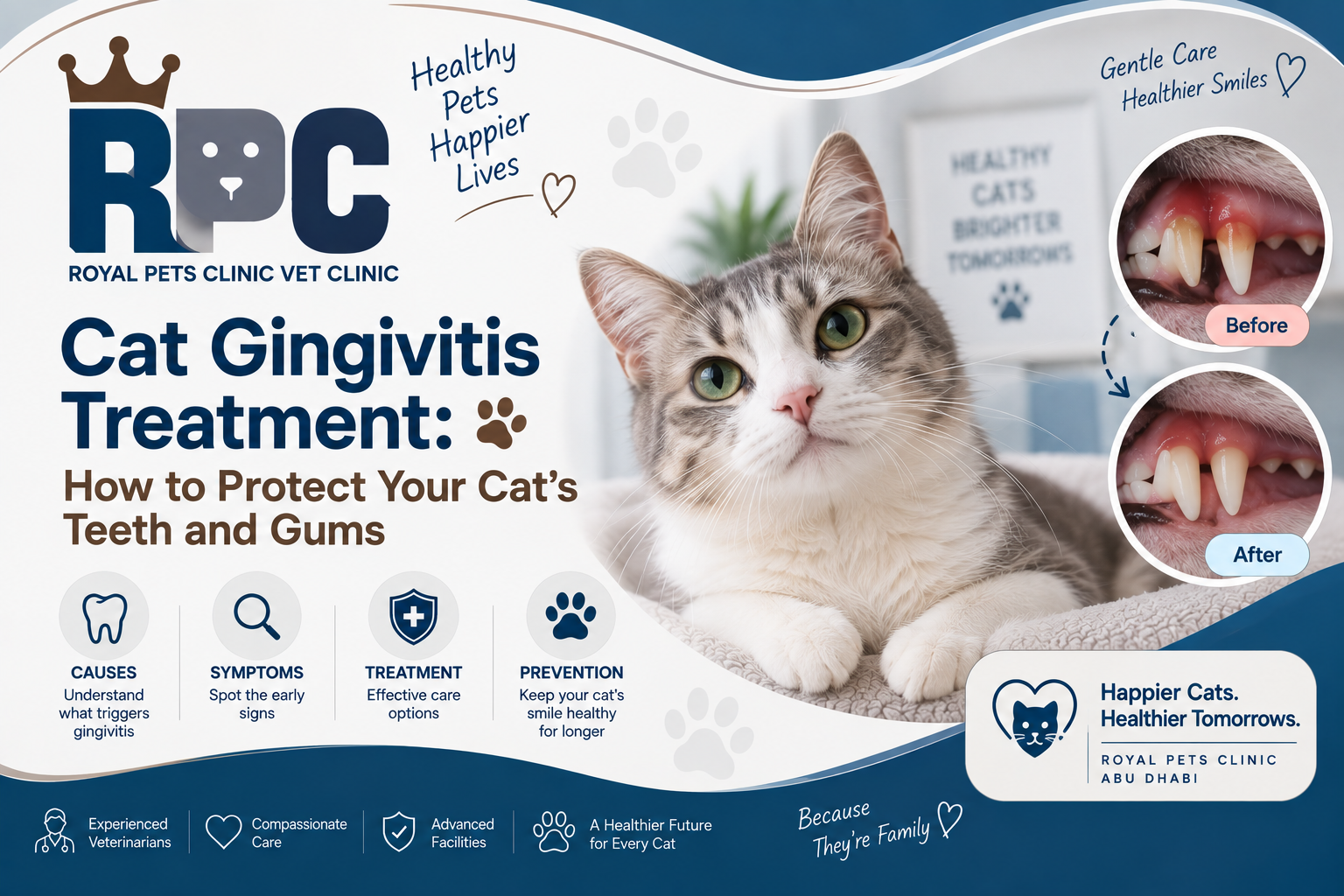
Red gums, bad breath, difficulty eating, or a sudden reluctance to chew may seem like minor changes, but they can be signs that your cat is experiencing painful inflammation inside the mouth. Finding the right cat gingivitis treatment early can help relieve discomfort, control dental disease, and protect your cat’s long-term oral health.
Gingivitis is inflammation of the gums, commonly associated with plaque and tartar accumulating around the teeth and gumline. In its earlier stages, gingivitis can often improve significantly when the underlying dental problems are properly addressed. However, leaving inflamed gums untreated may allow dental disease to progress and potentially affect the tissues supporting the teeth.
If you have noticed changes in your cat’s mouth, appetite, breath, or eating habits, a veterinary dental examination is an important first step.
في Royal Pets Veterinary Clinic Abu Dhabi, our veterinary team provides professional consultations, dental scaling, diagnostic services, laboratory testing, and comprehensive veterinary care in a comfortable, pet-friendly environment.
What Is Gingivitis in Cats?
Cat gingivitis occurs when the gum tissue surrounding the teeth becomes inflamed. Healthy gums are generally pink, while gums affected by gingivitis may become noticeably red, swollen, sensitive, or prone to bleeding.
Plaque continuously forms on the surface of the teeth. If it is not adequately controlled, it can contribute to tartar accumulation and irritation around the gumline.
For some cats, gingivitis remains relatively mild. For others, dental inflammation can become more extensive and painful.
This is why appropriate cat gingivitis treatment should begin with identifying exactly what is happening inside your cat’s mouth instead of relying exclusively on home remedies.
What Causes Gingivitis in Cats?
Several factors can contribute to inflamed gums. Plaque and tartar accumulation are among the most important contributors, but every cat is different.
Possible factors associated with gingivitis include:
- Plaque and tartar buildup
- Poor oral hygiene
- Crowded or abnormal teeth
- Lack of regular veterinary dental evaluations
- Certain underlying medical conditions
- More extensive periodontal disease
- Other inflammatory conditions affecting the mouth
Because different oral diseases can produce similar symptoms, determining the cause is important before deciding on treatment.
A professional veterinary consultation can help distinguish ordinary gingivitis from a more complicated dental condition requiring additional investigation or treatment.
Signs Your Cat May Need Gingivitis Treatment
Cats are remarkably good at hiding discomfort. Dental pain can therefore exist long before an owner realizes something is wrong.
Watch your cat carefully for changes such as:
- Red or swollen gums
- Bleeding around the gumline
- Persistent bad breath
- Visible plaque or tartar
- Drooling
- Difficulty chewing
- Dropping food while eating
- Eating only on one side of the mouth
- Avoiding dry or hard food
- Pawing at the face or mouth
- Reduced appetite
- Becoming reluctant to have the face touched
- Changes in grooming behavior
Even when a cat continues eating, dental discomfort may still be present.
If your cat stops eating, appears to be in significant pain, develops facial swelling, has persistent oral bleeding, or suddenly becomes unwell, seek veterinary attention promptly.
How Is Cat Gingivitis Diagnosed?
Effective cat gingivitis treatment starts with a veterinary examination.
Your veterinarian may ask about your cat’s diet, dental-care routine, eating habits, previous health concerns, and when you first noticed symptoms.
An initial oral examination can reveal inflammation, tartar buildup, damaged teeth, or other visible abnormalities.
However, some dental problems occur beneath the gumline where they cannot be properly evaluated during a simple visual examination.
Depending on your cat’s condition, further assessment may be recommended to determine the extent of the disease and develop an appropriate treatment plan.
في Royal Pets Veterinary Clinic Abu Dhabi, our veterinarians take an individualized approach so that recommendations are based on your cat’s actual condition rather than a one-size-fits-all dental plan.
Cat Gingivitis Treatment: What Does Professional Care Involve?
The appropriate treatment depends on how advanced the inflammation is and whether other dental disease is present.
In many cases, professional dental cleaning is a major part of treatment.
Professional Dental Scaling
Plaque that hardens into tartar cannot usually be removed effectively through ordinary brushing.
Professional dental scaling allows accumulated plaque and tartar to be removed from tooth surfaces, including important areas around and below the gumline.
A thorough veterinary dental procedure is generally performed under anesthesia so the veterinary team can safely examine and clean areas that would otherwise be difficult or impossible to access properly.
Removing irritating plaque and tartar gives inflamed gums an opportunity to recover and is particularly important in mild cases of gingivitis.
في Royal Pets Veterinary Clinic Abu Dhabi, dental scaling is available as part of our comprehensive veterinary services.
Dental Assessment Below the Gumline
The visible portion of a tooth does not always reveal everything happening underneath.
When clinically appropriate, dental imaging may be recommended to evaluate tooth roots, supporting structures, or suspected damage beneath the gumline.
This can be important when deciding whether a tooth can remain healthy and comfortable or whether additional treatment is necessary.
Tooth Extraction When Necessary
Not every cat with gingivitis requires extraction.
However, severely damaged, infected, loose, or painful teeth may sometimes need to be removed. Extraction can eliminate an ongoing source of pain and inflammation when preserving the affected tooth is no longer appropriate.
The decision should always be based on a veterinary assessment of the individual tooth and your cat’s overall oral condition.
Medication for Severe Inflammation
Some cats may require medication alongside their dental treatment.
Depending on the diagnosis and severity of the condition, a veterinarian may prescribe:
- Appropriate pain relief
- Antibiotics when clinically indicated
- Anti-inflammatory medication
These medications should only be administered according to veterinary instructions. Antibiotics alone do not remove the plaque and tartar responsible for many dental problems and therefore should not replace appropriate dental treatment when professional cleaning is required.
Is Cat Gingivitis Reversible?
One encouraging aspect of early gingivitis is that mild inflammation may often be reversible when plaque and tartar are professionally removed and effective oral care is maintained afterward.
However, advanced periodontal disease is different.
Once damage extends deeper into the structures supporting the teeth, some changes may become irreversible. Treatment then focuses on controlling infection and inflammation, eliminating painful disease, and protecting the remaining healthy teeth.
This makes early veterinary intervention particularly valuable.
Do not wait until your cat can no longer eat comfortably before arranging a dental evaluation.
Cat Gingivitis Treatment at Home
Professional treatment and home dental care work together rather than replacing one another.
Once your veterinarian has treated active dental disease and determined that home care is appropriate, establishing a regular oral-care routine can help reduce future plaque accumulation.
Brush Your Cat’s Teeth Regularly
Tooth brushing is one of the most useful ways of controlling plaque at home.
Use:
- A soft toothbrush designed for pets
- Finger brushes when appropriate
- Toothpaste specifically formulated for cats
Never use human toothpaste for your cat.
Human dental products may contain ingredients that are inappropriate or potentially harmful when swallowed by pets.
Introduce brushing gradually. Allow your cat to become comfortable with having the lips and mouth touched before attempting a complete brushing session.
Positive reinforcement and patience can make the process easier.
If your cat’s gums are already very painful, do not force brushing before speaking with your veterinarian.
Veterinary-Recommended Oral Rinses and Gels
Some cats may benefit from veterinary-recommended oral gels, rinses, or plaque-control products.
Certain products containing ingredients such as chlorhexidine may sometimes be recommended as part of an oral-care program.
However, products should be selected according to veterinary advice. What is suitable for one cat may not necessarily be appropriate for another.
Dental Diets and Dental Nutrition
Certain dental diets are designed to assist with plaque or tartar control.
Your veterinarian can help determine whether a dental diet would be helpful and appropriate for your cat’s nutritional needs.
Diet should complement professional care rather than being considered a cure for established gingivitis.
What Happens If Cat Gingivitis Is Left Untreated?
Ignoring ongoing gum inflammation can allow dental disease to progress.
Over time, a cat may experience increasing oral discomfort and deeper periodontal problems. Advanced disease can affect the tissues and bone supporting the teeth and may ultimately result in loose or painful teeth.
The most important reason to seek treatment is your cat’s comfort.
Dental pain can affect eating, grooming, behavior, and overall quality of life.
Early cat gingivitis treatment is generally much easier than waiting until extensive dental disease has developed.
How to Prevent Gingivitis From Returning
Completing professional treatment is only one part of protecting your cat’s dental health.
A long-term prevention strategy may include:
Regular Veterinary Dental Examinations
Routine examinations allow your veterinarian to identify plaque accumulation and gum inflammation before severe dental disease develops.
The appropriate interval between dental assessments varies according to the individual cat.
Consistent Home Dental Care
If your cat tolerates it and your veterinarian recommends it, regular brushing can significantly improve plaque control.
Starting slowly and making brushing part of a predictable routine often improves acceptance.
Monitor Your Cat’s Eating Habits
Pay attention to subtle behavioral changes.
A cat that suddenly prefers softer food, chews differently, drops food, or approaches the bowl but walks away may be experiencing mouth discomfort.
Check Your Cat’s Mouth When Possible
You do not need to perform a veterinary dental examination yourself.
However, occasionally looking for unusually red gums, visible tartar, swelling, or changes in breath can help you recognize when it is time to contact your veterinarian.
Why Professional Cat Dental Care Matters
Removing visible tartar from the front of a tooth is not the same as treating dental disease.
The most important areas can be located beneath the gumline, where plaque, periodontal pockets, tooth-root problems, and other abnormalities may be hidden.
Proper veterinary dental care allows the mouth to be thoroughly assessed while your cat remains safely positioned and comfortable during the procedure.
Trying to scrape tartar from your cat’s teeth at home is not recommended. It can injure the gums, damage tooth surfaces, cause stress, and still fail to address disease beneath the gumline.
When gingivitis is present, professional assessment is the safer approach.
Cat Gingivitis Treatment in Abu Dhabi
If you are searching for cat gingivitis treatment in Abu Dhabi, choosing a veterinary clinic with diagnostic capabilities and comprehensive healthcare services can make your cat’s treatment journey more convenient.
Royal Pets Veterinary Clinic Abu Dhabi is conveniently located in Khalifa City near El Ethad Plaza, Building C65, next to Life Pharmacy.
Our Abu Dhabi branch brings the same commitment to compassionate veterinary care that defines Royal Pets, providing a welcoming environment where pets are treated with patience, attention, and respect.
Our veterinary services include:
- Professional veterinary consultations
- Dental scaling
- X-ray imaging
- Ultrasound examinations
- Laboratory testing
- الإجراءات الجراحية المتقدمة
- Medical boarding
- Grooming and personal care
- Echocardiography
Having multiple veterinary services available in one location can be especially valuable when dental symptoms require investigation beyond a routine oral examination.
Why Choose Royal Pets Veterinary Clinic Abu Dhabi?
Your cat cannot explain where it hurts, which makes careful observation and professional veterinary assessment extremely important.
في Royal Pets Veterinary Clinic Abu Dhabi, our experienced veterinarians and veterinary technicians are committed to providing individualized, compassionate care using modern veterinary techniques.
We understand that veterinary visits can be stressful for cats and their owners. Our clinic is designed to provide a warm, safe, and pet-friendly environment while our team carefully evaluates your pet’s needs.
Whether your cat needs a routine dental assessment, professional dental scaling, diagnostic testing, or treatment for a more complex condition, our team is ready to help.
Choosing Royal Pets means choosing veterinary care built around your pet’s comfort, health, and individual needs.
Frequently Asked Questions About Cat Gingivitis Treatment
What is the best treatment for gingivitis in cats?
The best treatment depends on the severity and underlying cause. Many cats need a professional veterinary dental cleaning to remove plaque and tartar above and below the gumline. More advanced cases may require additional treatment such as medication or extraction of severely diseased teeth.
Can cat gingivitis go away on its own?
Mild gingivitis may improve when the source of inflammation is properly treated, but owners should not assume that persistent red or swollen gums will disappear without veterinary attention. Professional dental assessment is recommended.
Can I treat my cat’s gingivitis at home?
Home dental care can help control plaque and reduce the risk of recurrence, but it cannot reliably remove hardened tartar or treat advanced disease beneath the gumline. A veterinary examination should come first when gingivitis is already present.
How can I clean my cat’s teeth at home?
Use a soft pet toothbrush and toothpaste specifically formulated for cats. Introduce brushing gradually and follow your veterinarian’s recommendations, particularly if your cat already has painful or inflamed gums.
Can I use human toothpaste on my cat?
No. Human toothpaste should not be used for cats. Always choose a dental product formulated specifically for pets and recommended by your veterinarian.
Does gingivitis hurt cats?
Yes, inflamed gums can be uncomfortable or painful. More advanced dental disease may cause considerable discomfort and can affect your cat’s appetite, chewing behavior, grooming, and general quality of life.
Does every cat with gingivitis need teeth removed?
No. Tooth extraction is not necessary in every case. It may be recommended when individual teeth are severely damaged, infected, loose, or painful. Your veterinarian will determine whether extraction is necessary after assessing the mouth.
How long does cat gingivitis treatment take?
Treatment time depends on the severity of dental disease, the procedures required, and your cat’s general health. Your veterinarian can provide a more specific treatment and recovery plan after examining your cat.
How often should my cat have a dental checkup?
The appropriate frequency varies between cats because plaque and tartar accumulate at different rates. Your veterinarian can recommend a dental examination schedule based on your cat’s age, oral condition, medical history, and previous dental disease.
When should I contact a veterinarian about my cat’s gums?
Arrange an examination if you notice persistent redness, swelling, bleeding, bad breath, visible tartar, drooling, difficulty eating, or other signs of oral discomfort. Seek prompt veterinary attention if your cat stops eating or appears significantly unwell.
Give Your Cat a Healthier, More Comfortable Smile
Your cat may not be able to tell you that their gums hurt, but changes in eating, breath, grooming, or behavior can be their way of showing that something is wrong.
Addressing dental inflammation early may prevent unnecessary discomfort and make treatment more manageable.
If you have noticed red gums, tartar, persistent bad breath, difficulty chewing, or other signs of dental discomfort, now is the right time to arrange a professional evaluation.
For reliable cat gingivitis treatment in Abu Dhabi, contact Royal Pets Veterinary Clinic Abu Dhabi and let our experienced veterinary team assess your cat’s oral health and recommend an appropriate treatment plan.
Visit us in Khalifa City near El Ethad Plaza, Building C65, next to Life Pharmacy, and give your cat the attentive, compassionate veterinary care they deserve.
Contact Royal Pets Veterinary Clinic Abu Dhabi today to book your cat’s dental consultation and take the first step toward healthier gums, cleaner teeth, and a more comfortable life.