

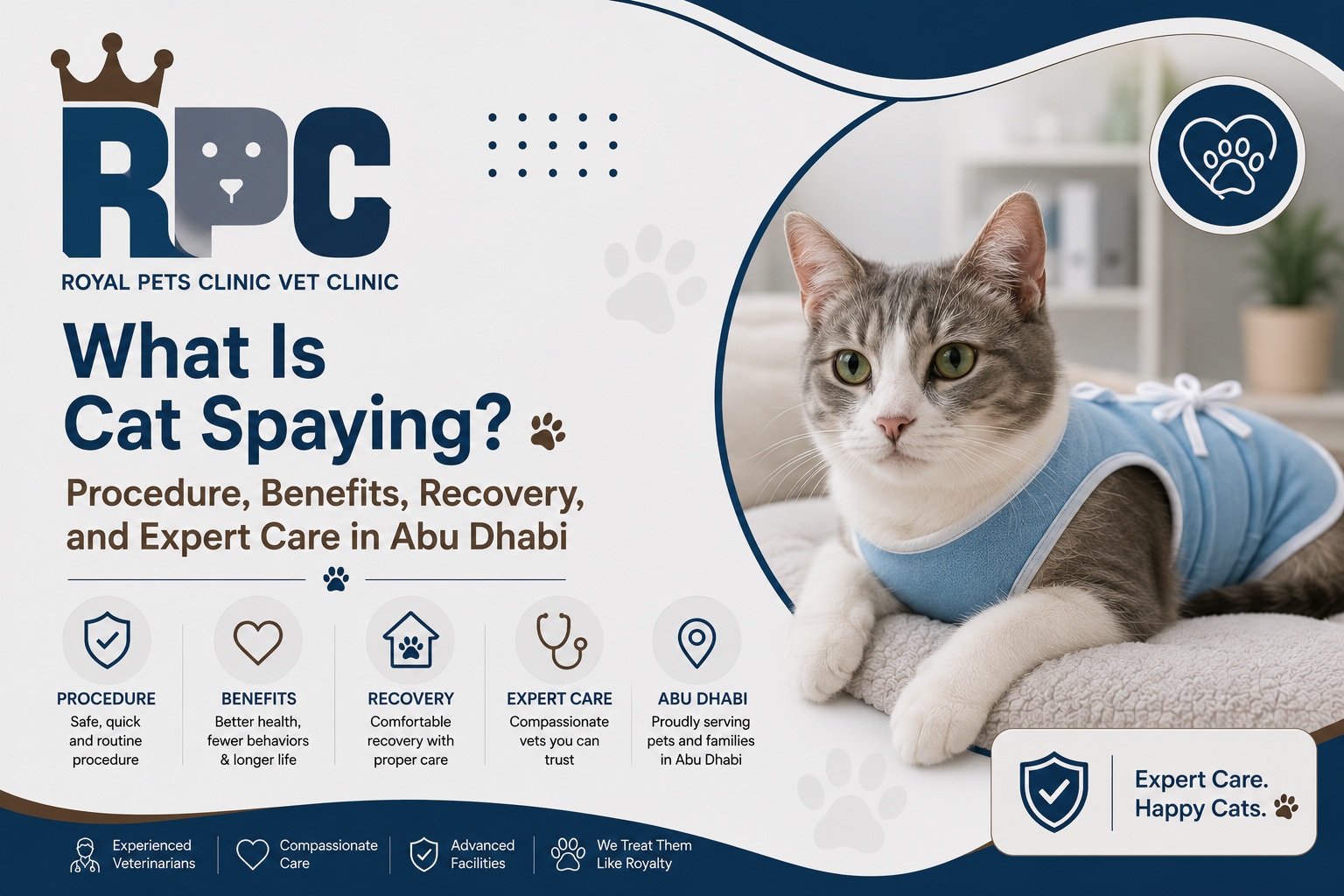
Understanding what is cat spaying can help you make a confident, informed decision about your female cat’s health. Spaying is a common veterinary operation that prevents pregnancy by surgically removing the reproductive organs, usually the ovaries and uterus.
Although the procedure is routinely performed, it remains a major surgery requiring general anesthesia, careful monitoring, effective pain management, and appropriate aftercare. Choosing an experienced veterinary team is therefore an important part of protecting your cat’s comfort and well-being.
في Royal Pets Veterinary Clinic Abu Dhabi, experienced veterinarians provide professional consultations, advanced surgical care, diagnostic testing, and compassionate support before and after your cat’s procedure.
What Is Cat Spaying?
Cat spaying is the surgical sterilization of a female cat. During the conventional procedure, known medically as an ovariohysterectomy, the veterinarian removes both ovaries and the uterus. Once these reproductive organs have been removed, the cat can no longer become pregnant or experience normal reproductive heat cycles.
In some surgical approaches, only the ovaries are removed. The most appropriate technique depends on the veterinarian’s clinical judgment, the cat’s health, and the surgical protocol being followed.
The term “neutering” can describe reproductive sterilization in both male and female cats. “Spaying” refers specifically to females, while “castration” is normally used for male cats.
Spaying is permanent, so the decision should be discussed with a veterinarian who can assess your cat’s age, health, reproductive status, and individual needs.
How Does Cat Spay Surgery Work?
Knowing what happens during cat spay surgery can reduce uncertainty and help owners feel more comfortable about the procedure.
Pre-surgical examination
Before surgery, the veterinarian examines the cat to make sure she is suitable for anesthesia. The assessment may include checking her heart, breathing, temperature, body condition, hydration, and general health.
Laboratory testing may also be recommended to provide additional information about organ function and identify health concerns that might affect anesthesia or recovery. The exact tests depend on factors such as the cat’s age, medical history, and physical examination.
Owners should tell the veterinarian about any recent vomiting, diarrhea, coughing, appetite changes, medications, supplements, pregnancy possibility, or previous reactions to anesthesia.
General anesthesia
The cat is placed under general anesthesia so that she remains unconscious and does not experience the operation. The veterinary team monitors her condition throughout the procedure and provides appropriate pain relief.
Because anesthesia is involved, owners must follow the clinic’s individual fasting instructions carefully. Do not assume that every cat should follow the same food or water restriction. Kittens, adult cats, and cats with certain medical conditions may receive different instructions.
Preparing the surgical area
A section of fur is clipped from the side or lower abdomen, depending on the surgical approach. The skin is then cleaned and prepared using sterile techniques to reduce the risk of contamination.
Removing the reproductive organs
The veterinarian makes an incision through the skin and abdominal wall to reach the reproductive tract. The blood vessels supplying the ovaries and uterus are carefully secured before the organs are removed.
The internal layers and skin are then closed using sutures, dissolvable stitches, surgical glue, or another appropriate closure method.
Recovery from anesthesia
After surgery, the cat is monitored as she wakes from anesthesia. Many cats can return home on the same day, although some may need additional observation depending on their condition, recovery, and the veterinarian’s recommendation.
Why Do Veterinarians Recommend Spaying Female Cats?
Spaying is not only about preventing kittens. It can also offer important health, behavioral, and welfare benefits.
Preventing unwanted pregnancy
An unspayed female cat can become pregnant once she reaches sexual maturity, including after an unexpected escape from the home. Spaying provides permanent protection against accidental pregnancy and prevents the challenges associated with pregnancy, birth, feeding kittens, and finding suitable homes for them.
Preventing unplanned litters also helps reduce the number of cats requiring rescue, shelter, or rehoming support.
Preventing uterine infections
Spaying can eliminate the risk of pyometra when the uterus is completely removed. Pyometra is a serious infection in which infected material collects inside the uterus. It can progress quickly and may require urgent medical and surgical treatment.
Removing the ovaries and uterus also prevents several other diseases affecting those organs.
Reducing mammary tumor risk
The timing of spaying can influence its protective effect against mammary tumors. Veterinary guidance indicates that spaying before the first heat can significantly reduce the risk of mammary cancer later in life.
However, timing should always be individualized. The veterinarian must consider the cat’s age, development, health, weight, and reproductive status before recommending a surgical date.
Ending heat cycles
A female cat in heat may become unusually vocal, restless, affectionate, or determined to escape. She may roll on the floor, raise her hindquarters, spray urine, or repeatedly call for a mate.
Because spaying removes the reproductive organs responsible for cycling, these heat-associated behaviors normally stop after the procedure. It does not necessarily change the cat’s underlying personality or correct behaviors caused by stress, fear, environment, or learned habits.
When Should a Female Cat Be Spayed?
There is no single online recommendation that is appropriate for every cat. Some cats are spayed while they are young, while others undergo the procedure as adults.
Factors affecting the appropriate timing include:
- Age and physical development
- Body weight and general health
- Vaccination and medical history
- Whether the cat has entered heat
- Whether she may be pregnant or nursing
- Previous illnesses or anesthetic reactions
- Lifestyle and contact with unneutered cats
Spaying before the first heat is commonly discussed because it prevents early pregnancy and may provide greater protection against mammary tumors. However, the final decision should be based on an individual veterinary examination rather than age alone.
Adult cats may also be suitable for spaying after appropriate evaluation. Cats currently in heat, pregnant, nursing, or managing a medical condition require a more individualized surgical plan.
A professional consultation at Royal Pets Veterinary Clinic Abu Dhabi gives owners the opportunity to discuss the safest timing for their cat rather than relying on general assumptions.
Is Cat Spaying Safe?
Cat spaying is a common veterinary procedure that is generally performed successfully, but no surgery or anesthetic is completely free of risk.
Potential complications can include anesthetic reactions, bleeding, wound infection, excessive swelling, damage to the incision, or delayed healing. A cat’s individual risk may be affected by her age, health, reproductive status, and any underlying medical condition.
Veterinary teams help manage these risks through pre-operative assessment, sterile surgical techniques, anesthetic monitoring, pain management, and careful post-operative observation.
This is one reason the quality of veterinary care matters. At Royal Pets Veterinary Clinic Abu Dhabi, the veterinary team can assess your cat before surgery and recommend appropriate laboratory testing or additional diagnostic investigation when clinically necessary.
The clinic’s broader diagnostic capabilities include laboratory testing, X-ray imaging, ultrasound, and echocardiography. Not every cat requires every test before spaying, but access to diagnostic services can help veterinarians investigate concerns identified during an examination.
Is Cat Spaying Painful?
Your cat should not consciously feel the operation because it is performed under general anesthesia. Pain medication may be provided before, during, and after surgery to support a more comfortable recovery.
Some temporary discomfort is still possible after the cat wakes. Signs may include hiding, reduced activity, reluctance to move, unusual posture, irritability, decreased appetite, increased vocalization, or sensitivity around the abdomen.
Contact the veterinarian when pain appears severe, persists, worsens, or prevents the cat from eating and resting normally.
Never give your cat human painkillers unless a veterinarian has specifically instructed you to do so. Medications such as ibuprofen and acetaminophen can be highly dangerous to cats. Only administer the medication prescribed for your pet, following the exact dose and schedule provided.
How to Prepare Your Cat for Spay Surgery
Good preparation begins with following the veterinary team’s instructions precisely.
Ask when food and water should be removed, when your cat should arrive, and whether she should continue taking any regular medication. Keep her indoors before the appointment so that she cannot mate, eat elsewhere, disappear, or become injured.
Transport her in a secure carrier lined with clean, comfortable bedding. Avoid carrying her into the clinic without proper containment, even when she is normally calm.
At home, prepare a quiet recovery area away from children, stairs, high furniture, and energetic pets. Place her bed, litter tray, food, and water within easy reach so that she does not need to jump or climb unnecessarily.
Before leaving the clinic after surgery, confirm:
- How and when to give medication
- When to offer food and water
- Whether a protective collar or recovery suit is required
- How long activity should be restricted
- Whether the stitches need removal
- When the follow-up examination should occur
- Which symptoms require an urgent call
What to Expect During Cat Spay Recovery
Cats recover at different speeds. Some may appear alert shortly after returning home, while others remain sleepy or slightly unsteady because of anesthesia.
During the first evening, provide a warm and quiet environment. Do not force food immediately unless the veterinary team has instructed you to feed her. Offer the recommended amount at the appropriate time and observe whether she can eat and drink comfortably.
The incision usually needs approximately one to two weeks to heal, although the exact period varies. Running, jumping, climbing, outdoor activity, and rough play should be restricted for as long as the veterinarian advises.
Inspect the incision regularly without pressing or pulling at it. A small amount of initial redness or mild bruising may occur, but the wound edges should remain together.
Prevent your cat from licking or biting the surgical area. Saliva, grooming, and chewing can introduce infection, damage stitches, or reopen the wound. A correctly fitted Elizabethan collar or veterinarian-approved recovery suit may be needed.
When Should You Contact the Veterinarian After Spaying?
Call the veterinary team when you notice anything that appears unusual or concerning. Do not wait for a routine follow-up if your cat seems to be getting worse.
Important warning signs include:
- Persistent bleeding
- Increasing redness or swelling
- Yellow, green, or foul-smelling discharge
- Missing stitches
- An opening in the incision
- Repeated vomiting or diarrhea
- Severe weakness or collapse
- Breathing difficulty
- Pale gums
- Significant pain
- Refusal to eat beyond the expected recovery period
- Extreme lethargy or unusual behavior
Excessive redness, swelling, bleeding, discharge, wound opening, or signs that the cat is unwell should be reported promptly.
When you are uncertain, contacting the veterinary team early is safer than attempting to diagnose a surgical complication at home.
Will Spaying Change Your Cat’s Personality?
Spaying does not normally replace a cat’s core personality. A playful cat can remain playful, and an affectionate cat can remain affectionate.
The changes owners notice are usually linked to the end of reproductive hormone cycles. Behaviors such as persistent calling, restlessness, escape attempts, and mate-seeking may reduce or stop.
Some cats may need fewer calories after being spayed. This does not mean weight gain is unavoidable. Portion control, appropriate food, enrichment, and daily play can help maintain a healthy body condition. Ask the veterinarian to recommend a feeding plan based on your cat’s weight, age, activity level, and overall health.
Common Myths About Cat Spaying
“My cat should have one litter first”
There is no established health benefit to requiring a female cat to have kittens before she is spayed. Allowing one pregnancy can expose her to the demands and possible complications of pregnancy and birth.
“Indoor cats cannot become pregnant”
Indoor cats may escape through open doors, windows, balconies, or damaged screens. An unspayed cat in heat may also make determined attempts to reach a mate.
“Spaying always causes obesity”
Spaying can change calorie requirements, but weight gain can often be prevented through appropriate portions, balanced nutrition, exercise, and regular weight monitoring.
“Spaying will make my cat unhappy”
Cats do not need to reproduce to enjoy a comfortable and fulfilling life. Appropriate nutrition, play, safety, affection, environmental enrichment, and preventive healthcare are much more relevant to everyday well-being.
Why Choose Royal Pets Veterinary Clinic Abu Dhabi?
Spaying your cat is an important medical decision, and you deserve clear explanations, careful preparation, and compassionate support throughout the process.
Royal Pets Veterinary Clinic Abu Dhabi brings trusted veterinary care to Khalifa City, near El Ethad Plaza, Building C65, next to Life Pharmacy. The clinic provides a warm, safe, and pet-friendly setting designed to reduce stress for pets and give their owners greater peace of mind.
The skilled team includes qualified veterinarians and veterinary technicians with experience and specialized animal healthcare training. Every patient is treated with attention, compassion, and a commitment to using appropriate modern veterinary techniques.
In addition to professional consultations and advanced surgical procedures, the clinic offers:
- Laboratory testing
- X-ray imaging
- Ultrasound examinations
- Echocardiography
- Medical boarding
- Dental scaling
- Grooming and personal care
These services allow your cat to receive coordinated support in one trusted environment, whether she needs a routine consultation, surgical assessment, diagnostic investigation, recovery support, or ongoing preventive care.
Take the Next Step for Your Cat’s Health:
Learning what is cat spaying is the first step. The next is discovering whether the procedure is appropriate for your cat and determining the safest time to perform it.
Every cat is different. Her age, body condition, medical history, heat status, and lifestyle should all be considered before surgery. A professional veterinary consultation provides the individualized guidance that a general online article cannot replace.
تواصل معنا Royal Pets Veterinary Clinic Abu Dhabi to discuss your female cat’s health, spaying options, pre-operative assessment, anesthesia, pain management, and recovery plan.
With an experienced veterinary team beside you, you can make a thoughtful decision focused on your cat’s safety, comfort, and long-term well-being.